
Microneedling at Home vs Professional: Does DIY Work, and Is It Worth the Risk?
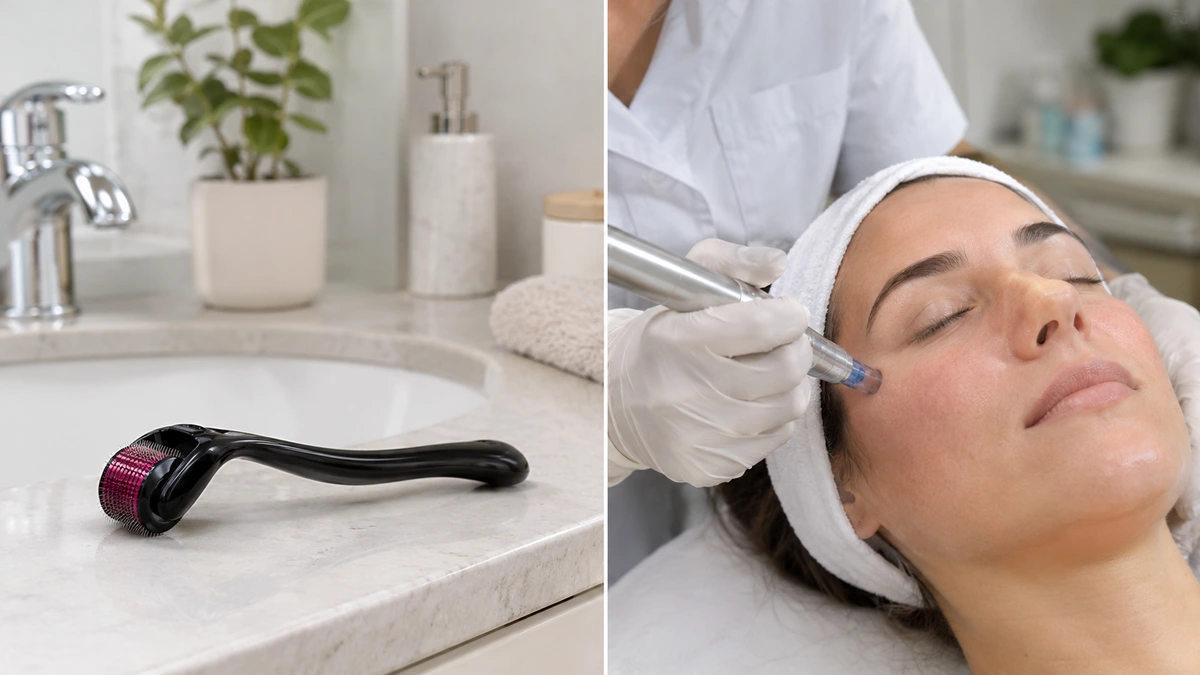
You can use a microneedling tool at home, but it is not the same as professional microneedling. Home rollers and stamps have short needles that mainly exfoliate the surface and help products absorb, so results are mild. Professional microneedling uses sterile, single use needles at controlled depths, which triggers real collagen growth for scars, fine lines and texture. Home tools also carry risks of infection, irritation and scarring when they are not used and cleaned correctly. This guide compares the two honestly and explains what the FDA says.
Can You Do Microneedling at Home?
Yes, you can do a light form of microneedling at home, but it works differently from a professional treatment. Most home tools have short, blunt needles that do not reach deep enough to rebuild collagen in a meaningful way. They can make skin look a little smoother and help serums sink in. They cannot match the depth, precision or results of a professional session.
The FDA explains that products with short, blunt needles that only claim to exfoliate or improve skin appearance are generally not regulated as medical devices. The U.S. Food and Drug Administration also notes that no microneedling medical devices are authorized for over the counter sale. In other words, the devices cleared to treat acne scars and wrinkles are meant for trained providers.
At-Home vs Professional Microneedling Compared
This table shows the main differences between home microneedling and a professional session. The gap is mostly about depth, sterility and control. Those three things decide both results and safety.
| Feature | At-home microneedling | Professional microneedling |
|---|---|---|
| Needle depth | Very shallow | Adjusted to your skin and concern |
| Needles | Reused roller or stamp | Sterile, single use cartridge |
| Skin prep | Done by you | Deep cleanse, numbing cream, sterile setup |
| Results | Mild glow, better product absorption | Collagen growth for scars, lines and texture |
| Main risks | Infection, irritation, tears, scarring | Low when done by a trained provider |
| Aftercare | Self guided | Personal instructions and follow up |
Does At-Home Microneedling Work?
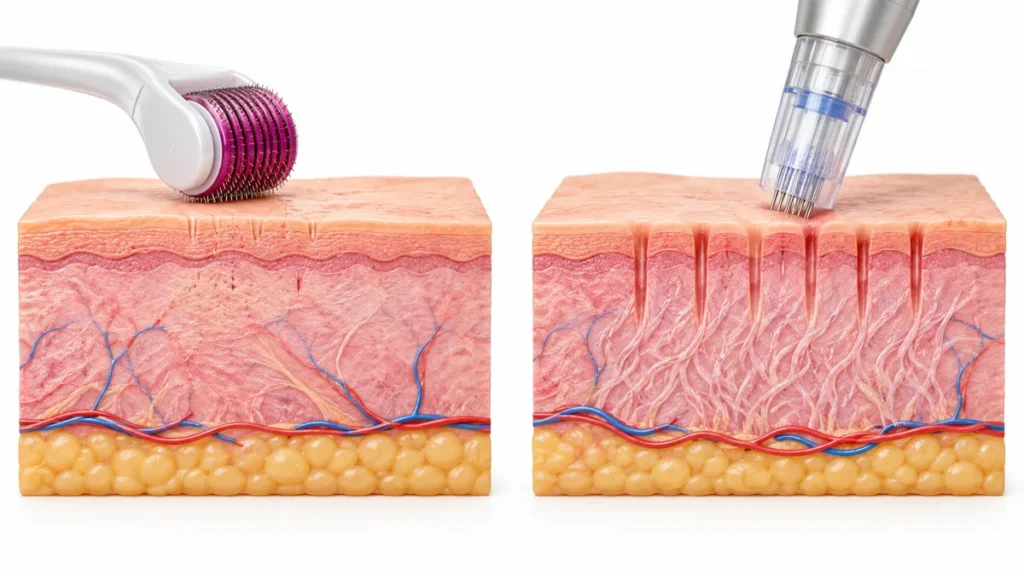
At-home microneedling works only in a limited way. Short needles can lightly exfoliate and help serums absorb, so some people notice a slight glow. They do not create the controlled injury needed to rebuild collagen in acne scars or deeper lines. At-home microneedling before and after photos rarely show the kind of change seen after a professional series.
Rolling devices also drag across the skin, which can tear tiny tracks rather than make clean, straight channels. That uneven injury can irritate skin without adding much benefit. Professional pens move straight up and down at a set depth, which gives more even results.
Is At-Home Microneedling Safe?
At-home microneedling carries real risks, especially when tools are reused, shared or used too hard. The American Academy of Dermatology warns that home products can cause irritation from overuse, infection or scarring if they pierce the skin, and color or texture changes from pressing too hard. It also notes they can spread warts, cold sores and other viruses. The FDA advises cleaning home products as directed and never sharing them.
The biggest problems come from dull needles, poor cleaning and rolling over active acne or broken skin. These can push bacteria deeper and cause breakouts or infection. Darker skin tones also have a higher risk of dark marks after irritation.
The Risk of Using Serums at Home
Putting the wrong product on freshly needled skin is one of the main risks of home microneedling. Open channels let ingredients travel deeper than they were designed to go. Fragrance, acids, vitamin C and products that are not sterile can cause stinging, rashes and, in rare cases, lasting reactions. If you use a home roller, choose only a plain, fragrance free hyaluronic acid serum.
Professional treatments use sterile, purpose made products during and after the session. The provider also knows which ingredients to keep off the skin until it heals. Our guide to the best serums for microneedling explains which ingredients are used safely and which to avoid.
How Often Can You Do Microneedling at Home?
If you use a short, home roller, most manufacturers suggest no more than once or twice a week, and less often for sensitive skin. Using it too often irritates the skin and can cause redness and breakouts. Never use it on active acne, cold sores, eczema or broken skin. Replace the head as directed, since dull needles damage skin more.
Who Should Avoid DIY Microneedling?
Some people should not try DIY needling at all. This includes anyone with active acne, rosacea, eczema, psoriasis, cold sores or a skin infection on the face. It also includes people who take blood thinners or have a bleeding disorder, diabetes or a weak immune system, which the FDA lists as reasons for caution. Anyone who is pregnant, or who has used isotretinoin recently, should ask their doctor first.
Why Professional Microneedling Gives Better Results
Professional microneedling gives better results because the provider controls depth, sterility and technique. At our spa, Luzmila cleanses your skin, applies numbing cream and uses a sterile needle technique for every session. She adjusts depth to your skin and concern, then applies a soothing product and gives you personal aftercare. That control is what turns microneedling into real collagen change.
Professional sessions are also spaced correctly, usually four to six weeks apart, so skin can heal fully. Our guide to microneedling healing stages shows what normal recovery looks like. Knowing what is normal helps you spot problems early.
When to Book a Professional Instead
Book a professional session if you want to treat acne scars, fine lines, large pores or rough texture, or if home tools have not helped. A professional is also the safer choice if you have darker skin, sensitive skin or a history of breakouts. If something went wrong after using a home roller, such as lasting redness, bumps or dark marks, read our guide to microneedling side effects and talk to a provider.
Frequently Asked Questions
Is microneedling at home as good as professional?
No. At-home microneedling tools use short needles that mainly exfoliate and help products absorb, so results are mild. Professional microneedling uses sterile needles at controlled depths to rebuild collagen, which gives stronger results for acne scars, fine lines and texture.
Is at-home microneedling safe?
At-home microneedling can be risky if tools are reused, shared, pressed too hard or used on broken skin. Risks include irritation, infection, scarring and dark marks. Clean the tool as directed, never share it, use only plain serums and skip it if you have active acne or skin conditions.
Does at-home microneedling work for acne scars?
Not much. Acne scars need deeper, controlled microneedling to rebuild collagen under the scar, which home tools cannot safely reach. Home rollers may slightly improve surface texture. A professional series of three to six sessions gives much better results for scars.
What should I put on my face after microneedling at home?
Use only a plain, fragrance free hyaluronic acid serum or a gentle moisturizer after using a home roller. Avoid acids, retinol, vitamin C, fragrance and makeup for at least a day. Wear sunscreen the next morning and keep your hands and pillowcase clean.
Book Professional Microneedling in Deerfield Beach
At SkinExpert LaPiel, Luzmila performs every microneedling session personally, using a sterile needle technique and depth matched to your skin. Consultations are available in English and Spanish.
Call or WhatsApp (561) 929-0945 to book a complimentary consultation in English or Spanish. Visit us at 1000 E Hillsboro Blvd, Unit 201, Deerfield Beach, FL 33441. We welcome clients from Boca Raton, Pompano Beach, Lighthouse Point, Coconut Creek and across South Florida.
About the Author
Luzmila Dahlstrom, Licensed Esthetician. Luzmila is the founder of SkinExpert LaPiel and has more than 23 years of experience caring for skin in South Florida. She holds specialist certifications in microneedling, dermaplaning, microdermabrasion and European facial technique. She personally performs every treatment at the spa and consults in both English and Spanish. Learn more about Luzmila.
This article is for general education and is not medical advice. If you develop swelling, pus, fever or spreading redness after any microneedling, seek medical care.
Sources
- U.S. Food and Drug Administration. Microneedling devices: getting to the point on benefits, risks and safety. October 2025.
- American Academy of Dermatology. Microneedling can fade scars, uneven skin tone, and more.